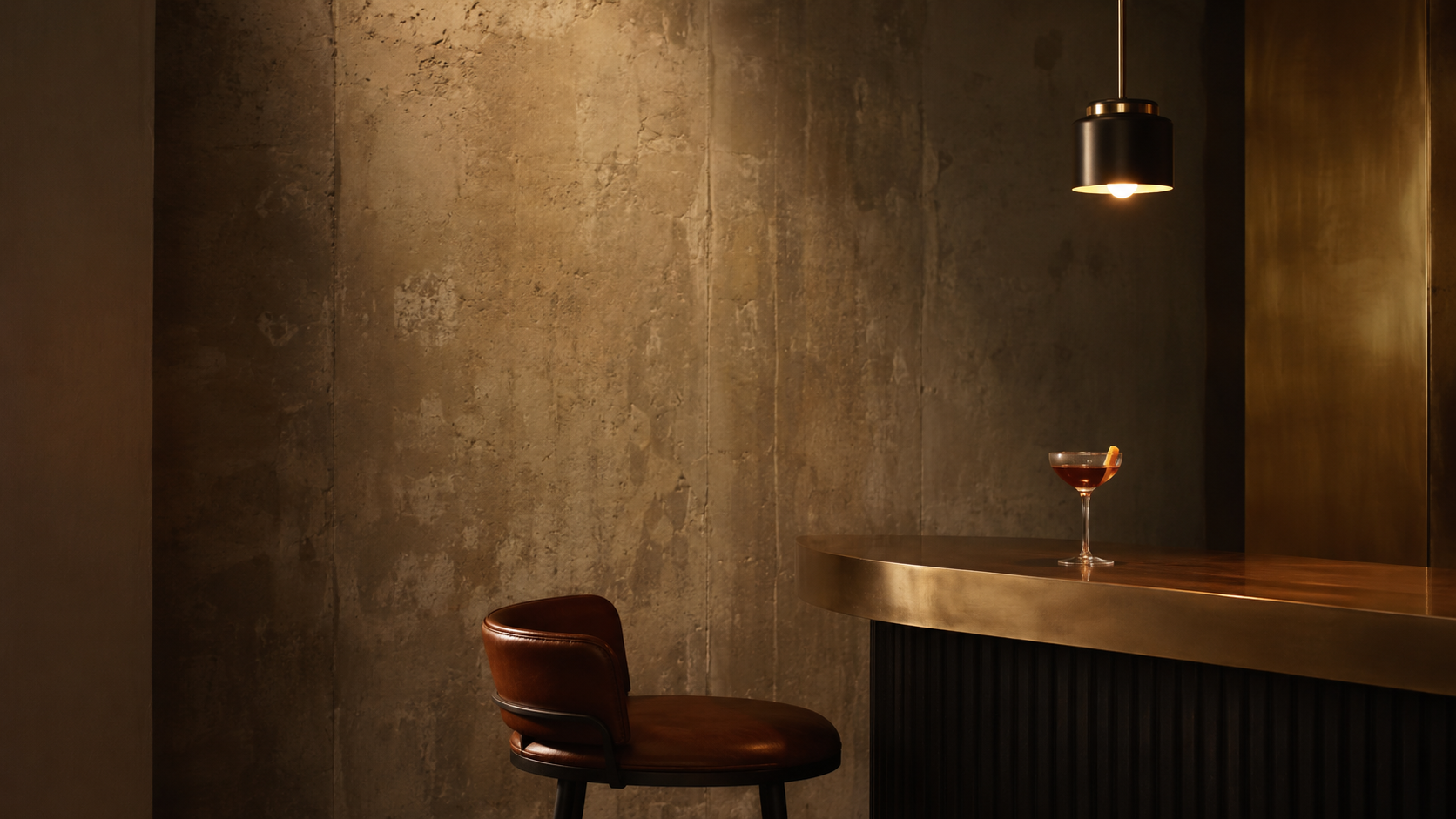
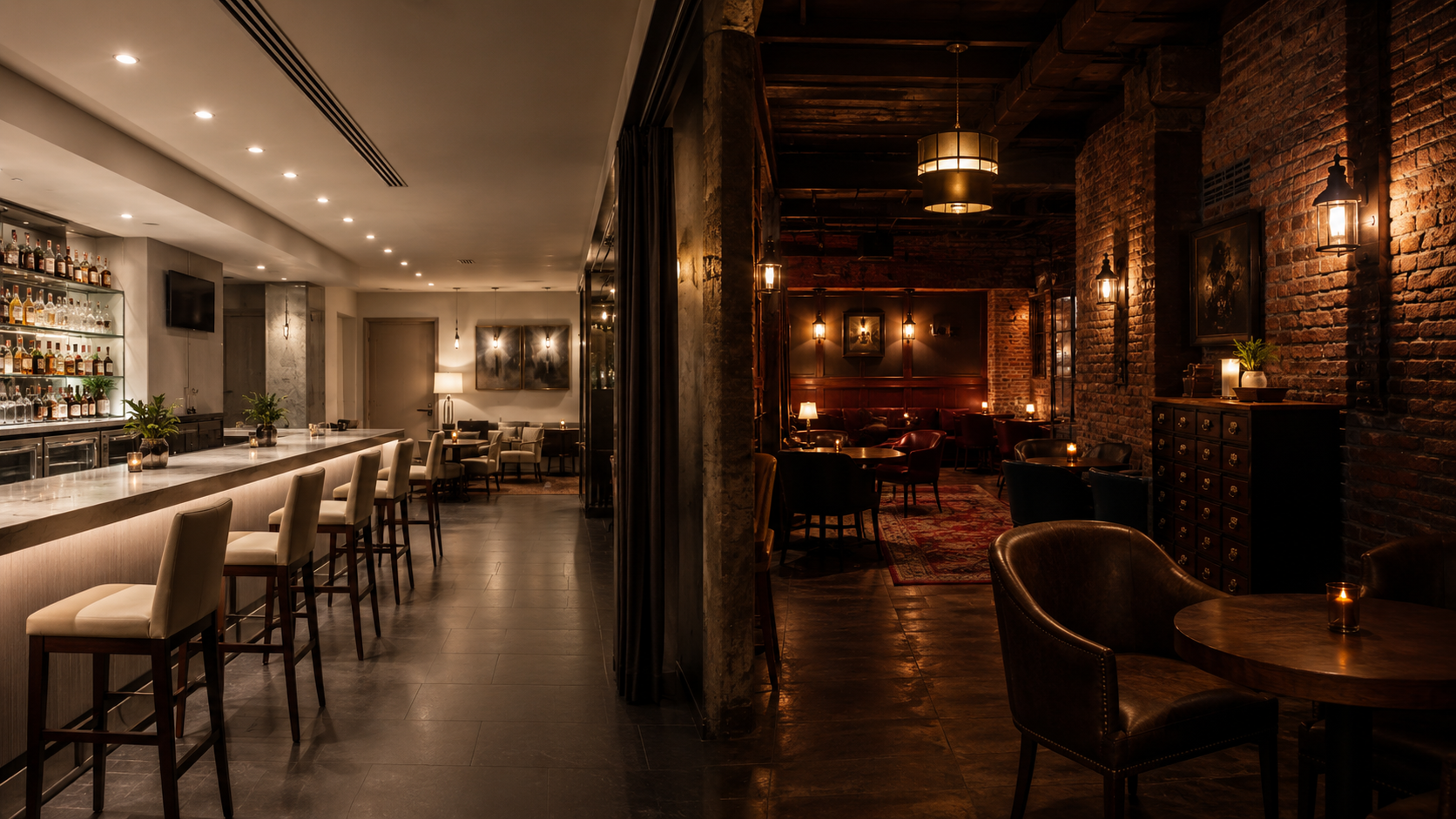
Ask someone about the best bar they've ever been to. They'll describe the space before they describe the drink. The long corridor that opened into a courtyard. The way the candles reflected off the copper bar top. The staircase that spiralled up to a hidden second floor. Design is the first thing you experience when you walk in, and it's the last thing you remember when you leave.
The Architecture of First Impressions
You form an opinion about a venue in the first eight seconds. Before you've spoken to anyone, before you've seen a menu, before you've registered the music — you've already decided if this place is for you. That decision is almost entirely architectural. Ceiling height determines whether the space feels intimate or grand. The ratio of hard surfaces to soft ones determines whether it sounds lively or chaotic. The entrance sequence — the transition from street to interior — sets the emotional register for the entire evening.
The best venue designers obsess over this threshold moment. As Dezeen has documented extensively, the world's most celebrated hospitality spaces treat the entrance as a narrative device, not a practical necessity.
Materials Tell Stories
Raw concrete says something different than polished marble. Reclaimed teak says something different than laminate. Patinated brass says something different than brushed stainless steel. Every material choice is a signal — about price point, about aesthetic philosophy, about how seriously the owners take the experience they're selling.
In Bangkok's Charoenkrung district, a wave of bars have embraced the existing architecture of century-old shophouses: exposed brick, original floor tiles, timber beams darkened by decades of tropical humidity. These materials can't be replicated or purchased. They're earned by the building itself, and they give these venues an authenticity that no amount of interior design budget can manufacture.
The Floor Plan Is the Experience
How a venue is laid out determines how it feels at capacity. A long, narrow room with the bar at the back creates a journey — you pass through the crowd to reach the centre. An open room with the bar in the middle creates a hub — everyone orbits the same focal point. Multiple small rooms create discovery — each doorway reveals a new mood.
The worst floor plans are the ones that create dead zones: corners where nobody sits, corridors where people bunch up, areas near the toilets where tables sit perpetually empty. Great floor plans have no dead space. Every seat feels intentional. Every sightline reveals something worth looking at.
When Design Gets It Wrong
The most common design failure is prioritising photography over experience. Venues designed for Instagram — the tile wall, the neon sign, the perfectly styled flat-lay table — often feel hollow in person. They're optimised for a two-second image, not a two-hour evening. The lighting that looks perfect in a photo is usually too flat for actual ambiance. The furniture that looks sculptural is usually uncomfortable.
Design should serve the guest, not the camera. The best venues are the ones that photograph beautifully almost by accident, because spaces designed for real human comfort tend to look good too. The reverse is rarely true.
Why This Matters More Than the Menu
A cocktail menu can be changed overnight. A floor plan can't. A head bartender can be replaced. An architectural concept can't. The physical space is the one element of a venue that is truly permanent, truly foundational, truly irreplaceable. It's the canvas everything else is painted on. Get the design right and a mediocre menu can still produce a memorable evening. Get it wrong and the best drinks in the city won't save you.