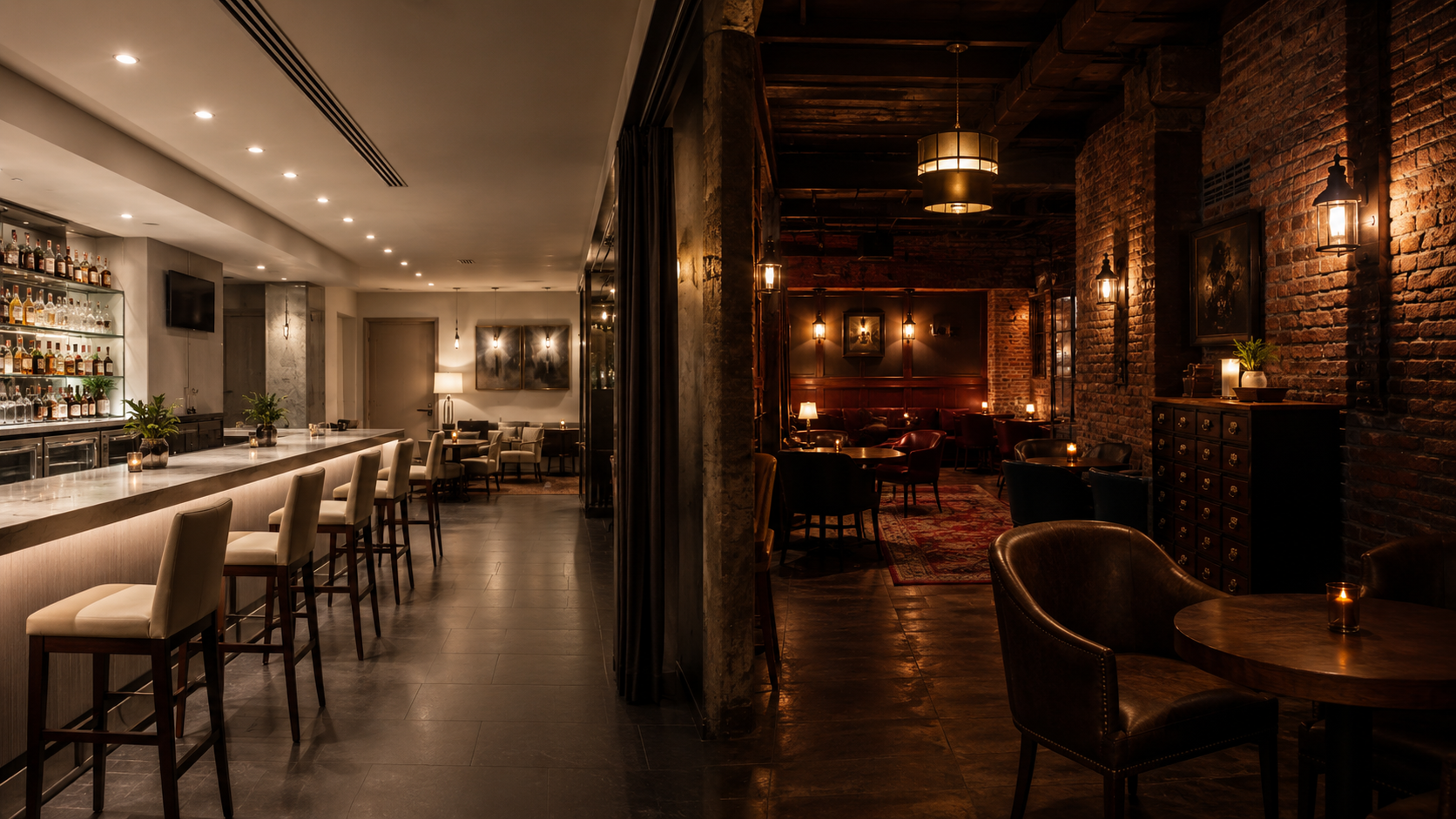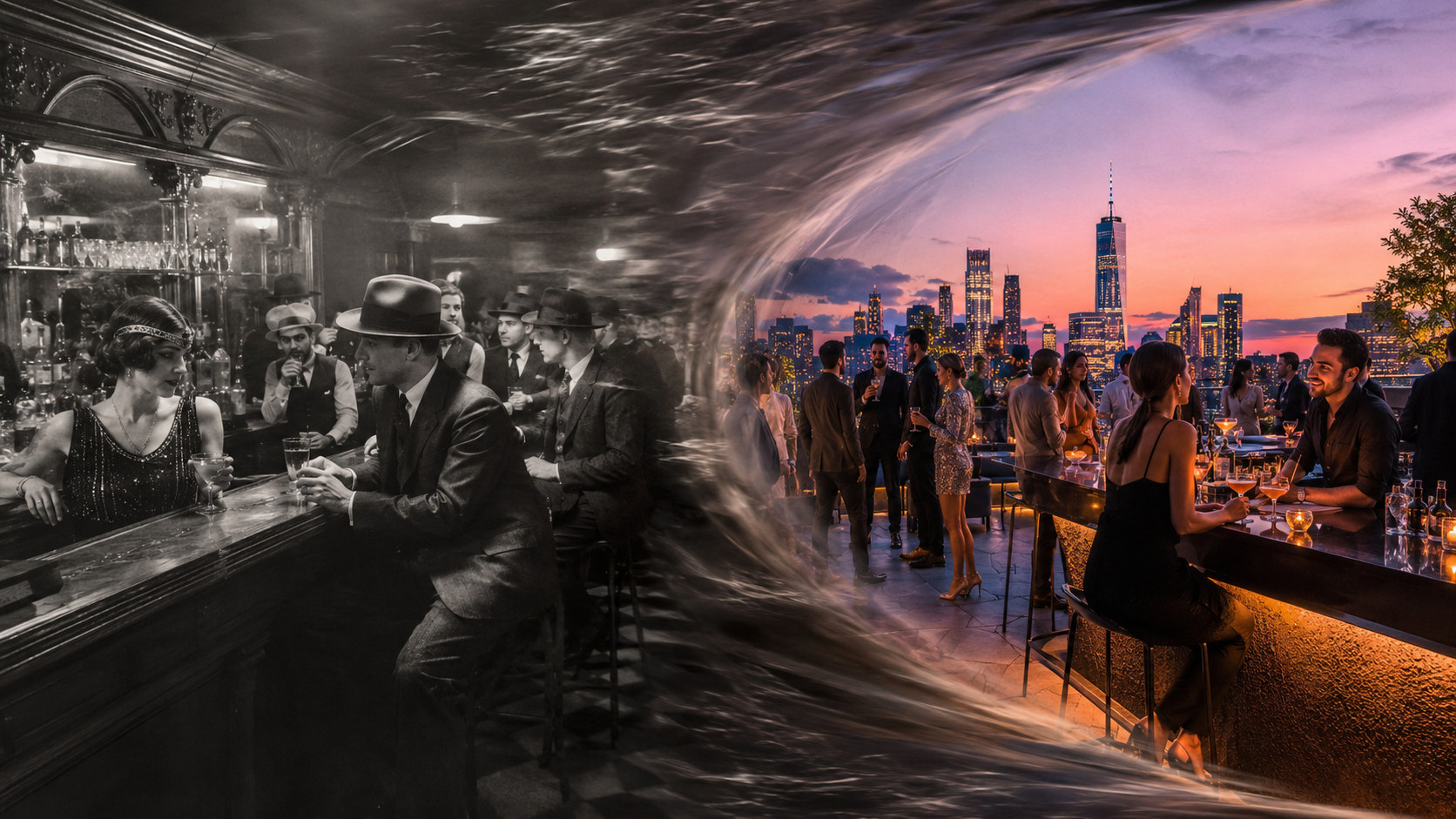

Walk into any bar and you'll form an opinion about the music within thirty seconds. Too loud, too quiet, wrong genre, right genre at wrong volume — the sonic environment is the first thing that feels either right or off. Most bars treat music as an afterthought. The great ones treat it as foundational infrastructure, as critical as the lighting rig or the cocktail menu.
Volume Is a Design Decision
There's a specific volume range where music enhances conversation without competing with it. It sits around 70-75 decibels — loud enough to fill silences between sentences, quiet enough that nobody has to raise their voice. Below 65 and the room feels clinical. Above 80 and conversation becomes a shouting match.
The best bars adjust volume dynamically. At 6 PM when the room is quarter-full, the music sits lower — background texture. By 9 PM when the space fills, it rises to match the ambient noise. By 11 PM it's pushing into the range where the music becomes the primary experience, and conversations move to the edges. This progression isn't random. It's programmed, rehearsed, and executed with the same precision as the cocktail service.
Genre as Identity
What you play defines who walks through the door. A jazz bar attracts a different crowd than a house music lounge, which attracts a different crowd than a venue playing curated indie rock. Music is the most efficient signalling mechanism a venue has — more immediate than decor, more accessible than a menu, more honest than marketing.
Bangkok's Thonglor strip demonstrates this perfectly. Within a single kilometre, you can find venues whose music programming ranges from deep house to vintage soul to contemporary Thai hip-hop, and each one has carved out a distinct identity and clientele purely through what comes out of the speakers. As Resident Advisor has documented across global nightlife scenes, music curation has become the primary differentiator in increasingly crowded bar districts.
The Playlist Problem
Spotify playlists are the enemy of venue identity. When a bar manager hands the music to an algorithm, they surrender the most powerful tool they have for shaping atmosphere. Algorithmic playlists optimise for individual listening — headphones, personal taste, passive consumption. Venue music needs to optimise for collective experience — shared space, diverse preferences, active ambiance.
The bars that get this right employ music directors or work with specialist curators who build custom playlists for specific times of day, specific days of the week, specific seasonal moods. It's an expense that most operators try to cut, and the ones who do cut it always wonder why their atmosphere feels generic.
Acoustics: The Hidden Variable
A room's acoustic properties matter more than the speakers in it. Hard surfaces — concrete, glass, marble — reflect sound and create reverberation. Soft surfaces — fabric, curtains, upholstered seating — absorb sound and create clarity. Most bars are designed visually and then struggle with acoustics retroactively, hanging panels and baffles to fix problems that shouldn't exist.
The smart approach is to design acoustics first. Bangkok's best listening bars — places like Studio Lam in Ekkamai — were built around their sound systems. The room dimensions, the surface materials, the speaker placement, the ceiling height were all calculated before the first tile was laid. The result is a space where music doesn't just play — it inhabits the room.
Silence as a Choice
Some of the most powerful venue moments are the quiet ones. The gap between songs. The sudden hush when a live musician pauses. The early evening hour when the music is barely audible and the dominant sound is ice clinking and low conversation. These quiet moments create contrast, and contrast creates memory. A bar that's always loud is never loud. A bar that knows when to be quiet makes every note matter more.