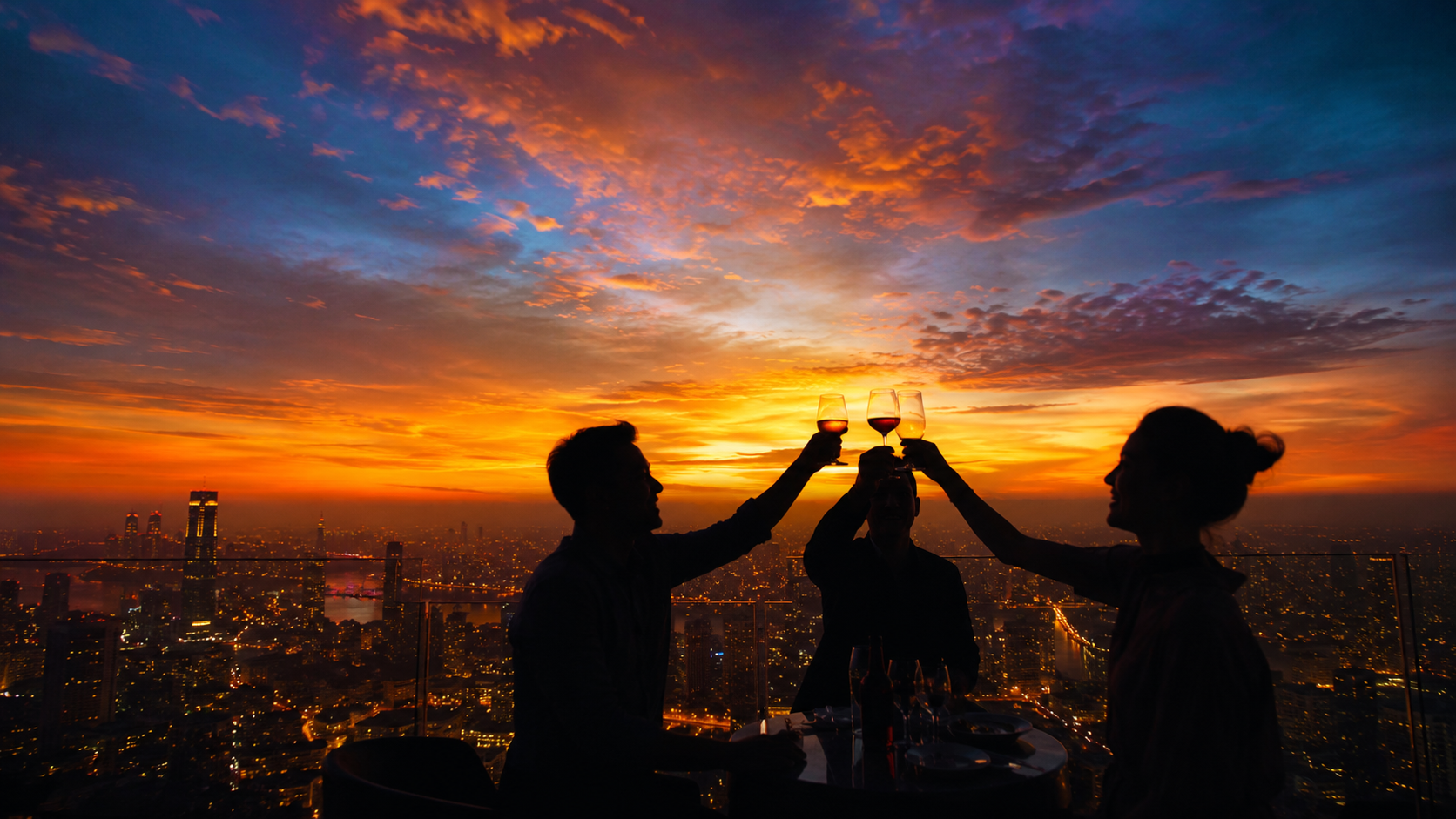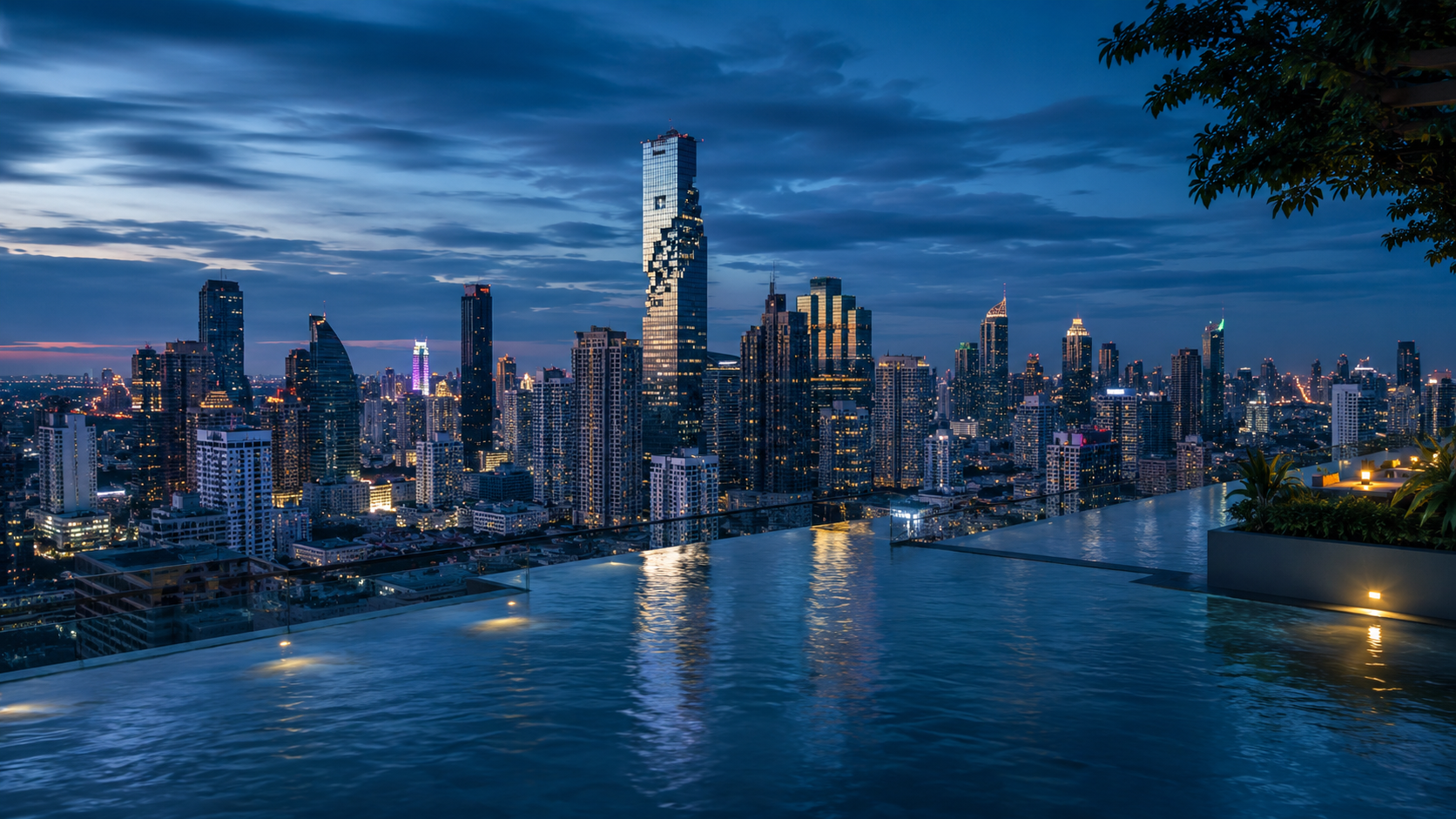
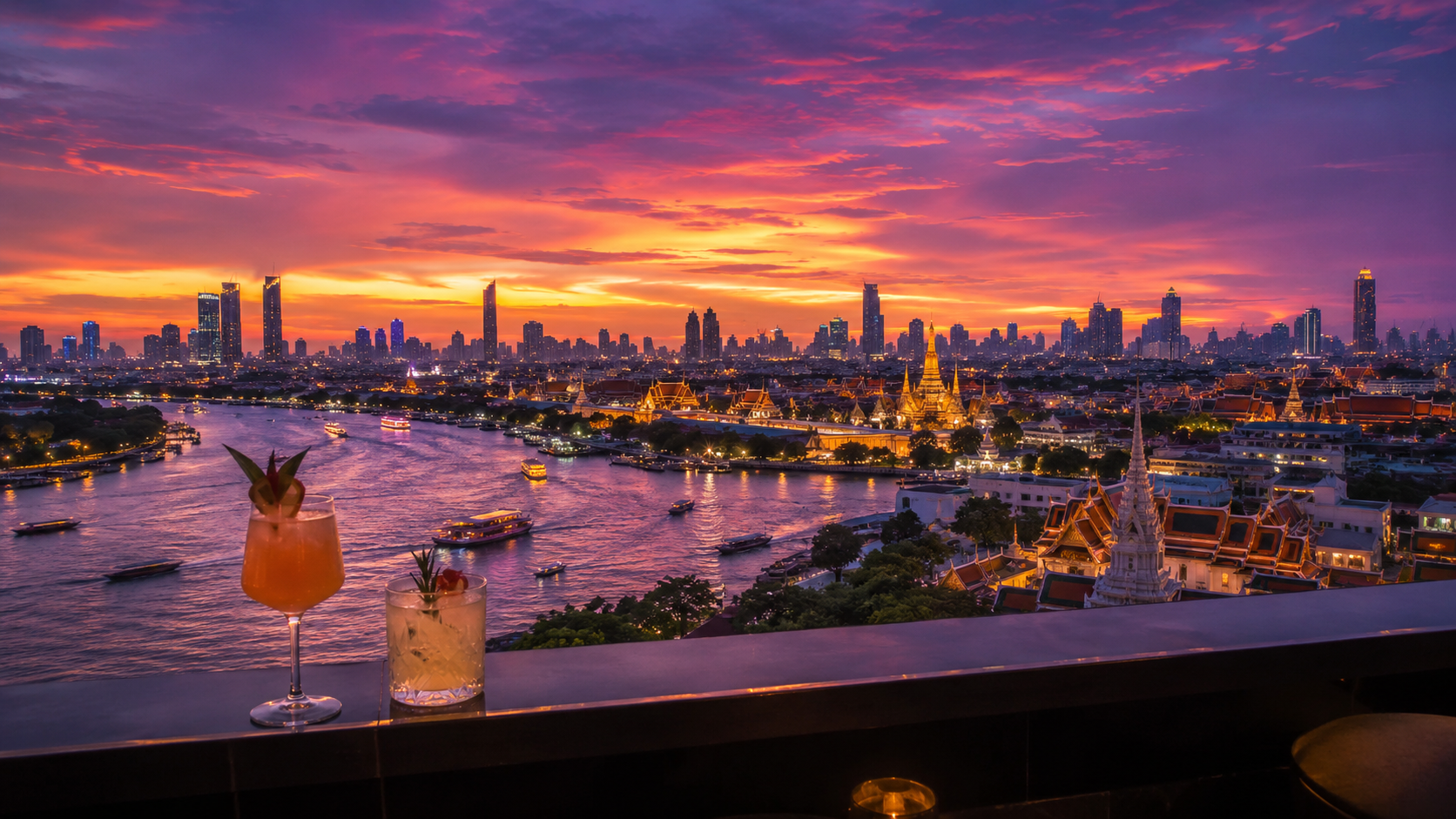
Before Bangkok, rooftop bars were mostly an afterthought. A hotel pool deck with a makeshift cocktail station. A fire-escape patio with folding chairs. Nobody was designing for the sky. Then somewhere around 2003, the Lebua State Tower opened its doors sixty-three floors above Silom, and the entire hospitality industry took notice.
The Vertical Drinking Revolution
What Bangkok understood before anyone else was that altitude changes the psychology of drinking. You don't nurse a gin and tonic the same way when the Chao Phraya River is a ribbon of light beneath you. The drink becomes secondary to the experience, which means the experience needs to be engineered with the same precision as the cocktail menu.
The early Bangkok rooftop pioneers — Sirocco, Vertigo, Moon Bar — didn't just build bars on roofs. They built stages. Open-air platforms with deliberate sightlines, wind management strategies, and lighting schemes that shifted with the sunset. They understood that at 200 metres, the city itself becomes the decor.
Why Nobody Else Got It Right at First
New York tried. London tried. Singapore came close. But most cities treated rooftop bars like regular bars that happened to be high up. They enclosed them in glass. They pumped in air conditioning. They blocked the wind and, with it, the entire point.
Bangkok's tropical climate forced a different approach. You can't enclose a rooftop bar when it's 34 degrees outside — guests will suffocate. So designers had to work with the elements. Open structures. Strategic shade. Misting systems hidden in planters. The constraints produced better venues.
The Template That Went Global
By 2015, the Bangkok model was being replicated across Southeast Asia and beyond. Dubai, Mumbai, Ho Chi Minh City — every new luxury hotel needed its sky bar. But the copies often missed the point. They built for Instagram, not for the actual experience of being sixty floors up with a drink in your hand and the city humming below.
The best Bangkok rooftop bars still outperform their imitators because they were designed by people who actually drink on rooftops. Not by architects who visited once, sketched something impressive, and flew home. There's a difference between a rooftop bar that photographs well and one that feels right at 11 PM on a Thursday when the breeze picks up and the ice in your whisky catches the light from the skyline.
What Comes Next
The next wave is already happening. Smaller rooftops. Boutique buildings in Ari and Ekkamai instead of five-star hotels in Sathorn. Less marble, more concrete. The aesthetic is shifting from luxury spectacle to neighbourhood elevation — literally. These places don't need sixty floors. They need five, plus good taste and a view of something worth looking at.
Bangkok didn't just build rooftop bars. It built the blueprint that every city now follows, whether they know it or not. And the city is still iterating, still pushing the format forward, still proving that nobody does altitude quite like this.